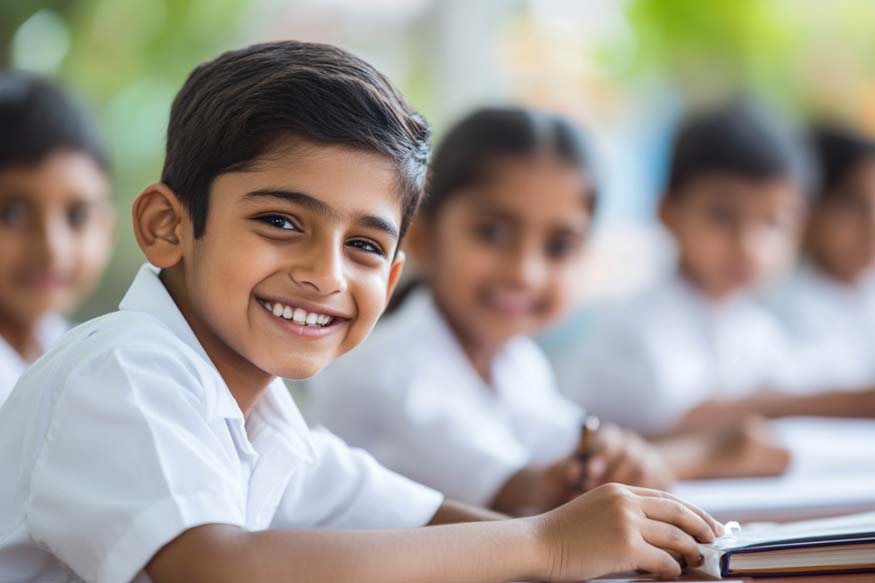
The early years are when children start understanding how learning works. They need a simple and comfortable environment where they can learn without pressure. The CBSE primary syllabus follows this idea by helping children build basic skills while keeping learning easy and interesting.
In this blog, we will clearly explain what kids learn in CBSE primary school, how the system works, and why it is suitable for early learners. The goal is to help you understand how your child grows step by step through early education CBSE.
Understanding the Foundation of Early Learning
The first few years of education are devoted to the easy to understand organic development of fundamental abilities. The CBSE curriculum for grades 1 to 5 places greater focus on understanding than memorisation, helping students grasp concepts with confidence and clarity.
Concept-Based Education
Instead of just memorising concepts, children are pushed to understand them. Learning becomes significant and enduring as a result.
Give priority to Core Skills
Reading, writing, speaking, and basic maths are all given similar weight in the CBSE elementary curricula. All subsequent learning is built upon these abilities.
Acquiring Knowledge at a Cosy Speed
Early on, students are not hurried. Learning is stress-free since they are given ample time to fully understand each idea.
Engaging Activities for the Classroom
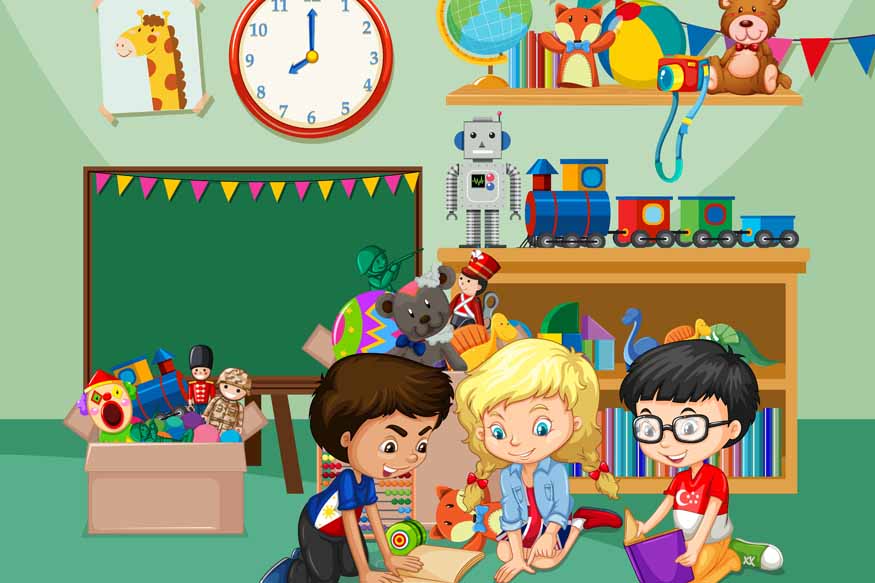
Teachers in early education CBSE using group projects, storytelling, and sketching to make their lessons interesting. Children remain engaged and engaged in class as a result.
Focus on Language Development
Language skills are a key part of early learning and help children share their thoughts with confidence. This is an important area of what kids learn in CBSE primary school.
Learning Languages Eventually
Children begin with simple words and sentences according to the CBSE syllabus for classes 1 to 5. They eventually go to reading brief texts and writing in an organised and understandable manner.
Developing Communication Skills
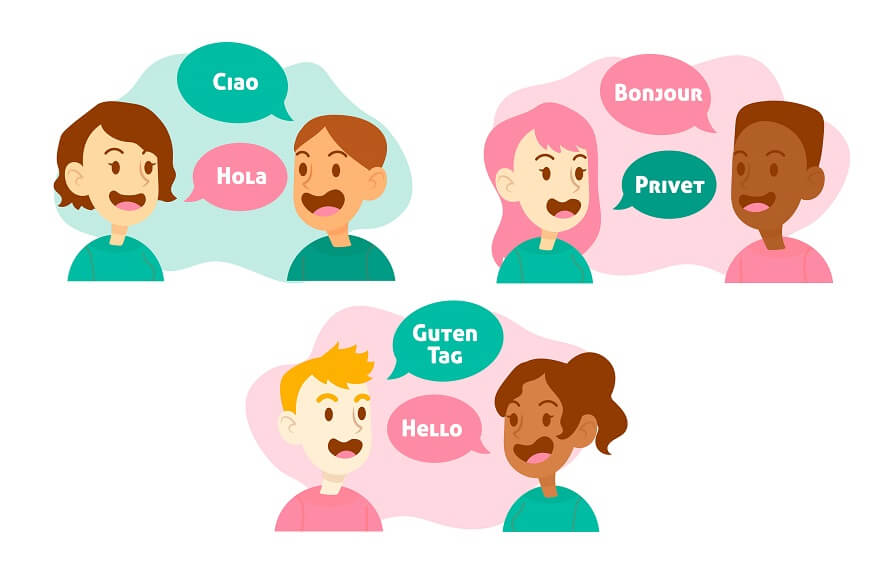
Children can write and speak more clearly thanks to the CBSE primary syllabus. Teachers in early education CBSE employ poetry, tales, and casual interactions to facilitate easy and interesting learning.
Developing Robust Math Principles
Helping students understand numbers in a manner that is relatable is the aim of early maths instruction. It is an essential part of the curriculum at CBSE Primary School and helps in the early growth of kids’ self-confidence.
- The CBSE syllabus for classes 1 to 5 presents fundamental ideas such as counting, addition, subtraction, multiplication, and division in a simple way.
- Maths is taught to kids using real-world examples, which helps them relate to and learn about the subject matter.
- The CBSE primary syllabus focuses on gradually increasing clarity rather than starting with complex techniques.
- Maths is taught in early education CBSE using games, objects, and activities that make learning fun and stress-free.
Environmental Awareness and General Knowledge
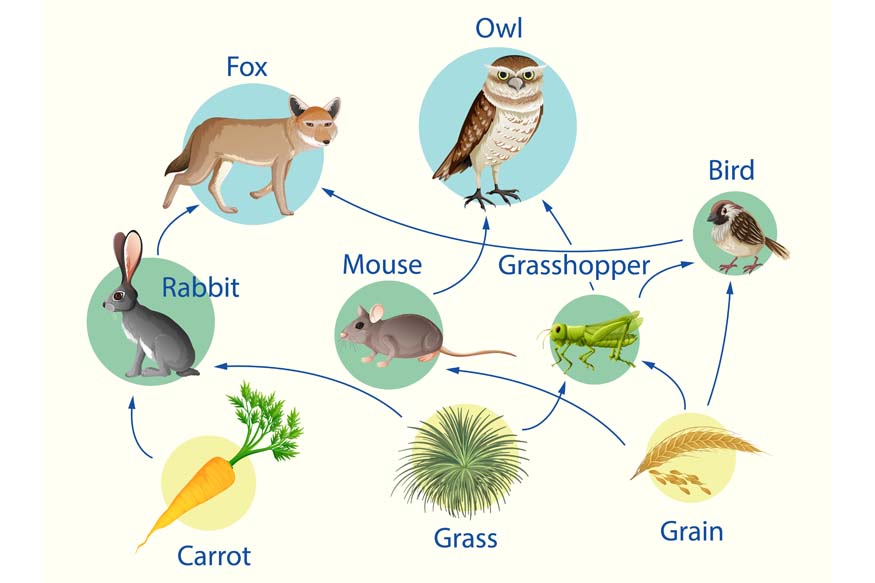
Additionally, early education increases children’s awareness of daily life and their place in it. This type of education is crucial to what children learn in CBSE elementary school since it develops practical understanding.
- Classes 1 to 5 of the CBSE syllabus convey concepts including everyday routines, fundamental responsibility, and straightforward decision-making.
- Kids start handling basic activities independently and learn how to behave in various contexts.
- The CBSE primary syllabus links lessons to real experiences so that children can relate easily.
- In early education CBSE, children are guided to observe, think, and respond in a more thoughtful and aware manner.
Development of Personal Abilities
Children can communicate their views in their own special ways through creative activities. As part of the curriculum at CBSE Primary School, they are crucial in helping children develop their confidence.
Investigating Various Creative Ideas
Drawing, crafts, music, and occasionally dance are all included in the CBSE curricula for classes 1 to 5. Children can enjoy studying outside of books and explore their interests through these activities.
Developing Self-Belief through Innovative thinking
By encouraging creative expression, the CBSE basic syllabus promotes general growth. Teachers in early education CBSE prioritise involvement over perfection, which helps kids feel self-assured and receptive to learning.
The Worthiness of Physical Education
A child’s day at school should include physical activity since it develops mental and physical development. Plus, physical activity promotes general development, which is an essential feature of what children learn in CBSE elementary school.
Promoting an Active Lifestyle
Playful activities, easy exercises, and outdoor games are all part of the CBSE curriculum for classes 1 to 5. These help children enjoy being active, build strength, and improve their balance.
Balancing Study and Play
The CBSE primary syllabus gives equal importance to physical development along with academics. In early education CBSE, schools maintain a healthy balance between learning and play, making school life enjoyable.
Social Competencies and Conduct
An essential component of early education is learning how to communicate with others. These skills play a major role in what children learn in CBSE elementary school and help to build their personalities.
- The CBSE curriculum for grades 1 to 5 teaches kids to cooperate, share, and show respect for others in a variety of contexts.
- Group exercises develop cooperation and strengthen communication abilities.
- By helping kids in understanding and expressing their emotions, the CBSE basic curriculum promotes emotional development.
- In early education CBSE, teachers guide students with care, helping them become responsible and kind individuals.
Easy and Stress-Free Evaluation
In contrast to grades, which are a significant component of what kids learn in CBSE primary school, early childhood assessment focuses on understanding a child’s growth. Teachers in grades 1 to 5 help students by watching how they participate in class activities rather than administering formal assessments. Children can study without fear thanks to the CBSE basic syllabus, which lessens pressure in the early years. Feedback is given in a helpful way in early education CBSE, which aids in understanding the child’s overall development for both parents and instructors.
Utilising Activity-Based Education
Instead of only listening or reading, children learn best when they participate in the process. A major component of what children learn at CBSE primary school is this practical approach, which gives teachings greater significance and retention.
- Practical projects and group discussions that promote inquiry and cooperation are part of the CBSE syllabus for classes 1 to 5.
- Activities help children understand ideas by experiencing them, rather than just studying them theoretically.
- The CBSE primary syllabus uses real-life examples and exercises to make concepts easier to remember.
- In early education CBSE, interactive lessons spark curiosity and keep students actively involved throughout the class.
Promoting Independent Thought
One of the main objectives of early education is to support children’s independent thought. It develops curiosity and self-assurance, two important aspects of what children learn in CBSE elementary school.
- Classes 1 to 5 of the CBSE syllabus encourage logical thinking from a young age.
- Rather than relying solely on memorisation, children are taught to solve issues step-by-step.
- The learning foundation is strengthened by the CBSE basic syllabus, which prioritises conceptual understanding.
- In early education CBSE, teachers guide students rather than giving direct answers, helping them develop curiosity.
Teachers’ Responsibility in the Early Years
In a child’s early learning journey, teachers are the most important source of support. A significant portion of what children learn in CBSE elementary school is shaped by their method.
- Teachers are free to modify lessons to fit the needs of various students using the CBSE syllabus for classes 1 to 5.
- They employ straightforward and captivating techniques to simplify ideas.
- The CBSE primary syllabus encourages close attention to each child’s learning progress.
- In early education CBSE, teachers guide, motivate, and help children build confidence step by step.
Developing Skills for the Future
Early childhood education improves children’s higher levels of confidence and capability. The lessons children acquire in CBSE primary school are genuinely beneficial for their long-term development since these experiences influence how they deal with new circumstances and difficulties in the future.
- The CBSE syllabus for classes 1 to 5 reinforces fundamental knowledge, which makes learning in upper grades simpler and more organised.
- As children’s confidence grows, they gradually become more at ease with novel and perhaps difficult subjects.
- Developing practical skills that facilitate learning in all topics is the main objective of the CBSE curriculum.
- In early education CBSE, children are guided to grow independently, think clearly, and handle tasks with confidence.
Conclusion
The purpose of the CBSE basic syllabus is to make the early school years enjoyable, easy to understand, and significant. The CBSE syllabus for grades 1 to 5 helps children study with confidence by progressively strengthening their foundations without increasing their stress levels. Early education in CBSE teaches life skills that promote social, emotional, and creative development along with academics. Beyond the classroom, kids at CBSE Primary School gain confidence, curiosity, better communication skills, and the capacity to work independently.
At Centre Point CBSE School in Nagpur learning is simple, engaging, and based on the CBSE primary syllabus. The CBSE syllabus class 1 to 5 is taught through interactive methods, making early education CBSE enjoyable and helping children clearly understand what kids learn in CBSE primary school. To learn more about our program, get in touch with us right now!